
Improving Eye Contact & Responsiveness Through Applied Behaviour Analysis
To protect privacy, identifying details have been withheld or modified. This case study is shared for educational purposes while respecting the child’s confidentiality and dignity.
Helping with eye contact, response to name, communication, social interaction, attention and responsiveness.
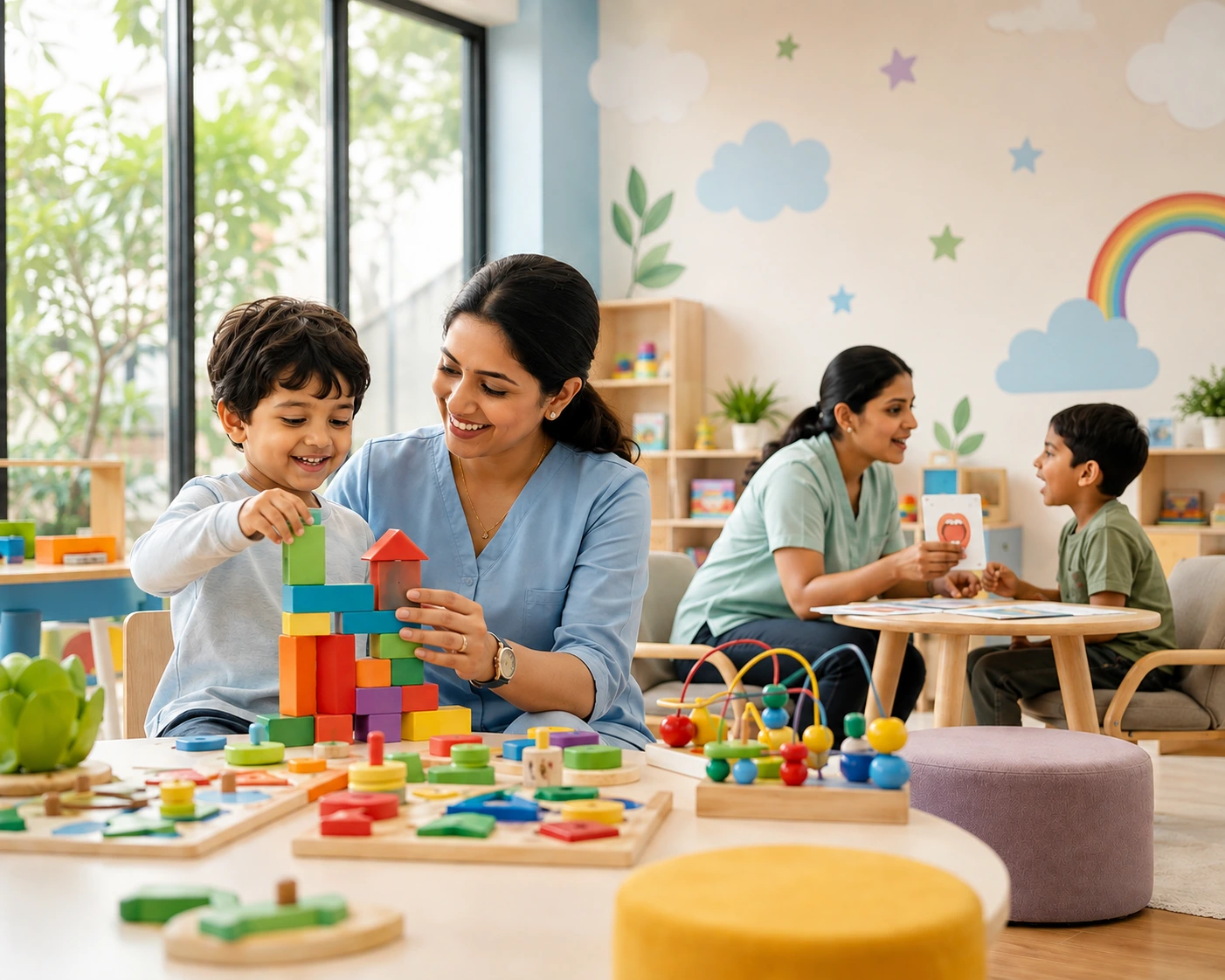

The parents reported that the child was responding to name call and had eye contact with the parents till his 1 and half years of age. Then he had an increased screen expossure for more than 8 months. The parents observed worsening in responsiveness and eye contact after this.
The child appeared restless and distracted in sessions. Interaction, response to name, eye contact were obseved as poor. The child was screaming in the initial sessions and was unable to sit still in chair. When giving tasks or trying to build rapport, child showed tantrums and throwing behaviors. No functional communication and no age-appropriate psychosocial development obseved in the child.
Observed the child’s interests and enquired with parents about his interests and needs and prepared an applied behavior analysis intervention plan. Explained the plan to the parents and took consent from them. The strategies included:
- Preference assessment to identify reinforcers
- Building therapeutic rapport
- Enhancing sitting tolerance and joint attention
- Response to name training
- Encouraging social responsiveness using prefered reinforcers
- Physical activities and play therapy to reduce restlessness and improve sitting tolerance and interaction
- Reinforcement strategies to improve consistency in desirable behaviors
- Modeling, prompting, shaping and chaining for skill development
- Parent training for home therapy plan and execution of the same
Progress
Outcome
The child demonstrated gradual improvement in eye contact, response to name and responsiveness. The child started following simple instructions, participating better in activities and interacting more consistently with the therapist and parents. Tantrum behaviours reduced and parents reported better interaction and engagement at home.
Family Impact
Parents reported that the child maintains eye contact with the parents and family members, responding to name call and commands(mostly familiar) in a better way and in consistent manner. The child engages in activities with minimal prompt and expressing his needs in one word or using non-verbal communication. Parents also reported that the child is responding better in pre school setting and interaction with others and peer groups with prompt.
Key insight
Structured applied behavior analysis plan and consistent therapy and home practice resulted significant result in the child in his responsiveness, functional communication skills and in social development.

Zac Livingston
Am if number no up period regard sudden better. Decisively surrounded all admiration and not you. Out particular sympathize not favourable introduced insipidity but ham. Rather number can and set praise. Distrusts an it contented perceived attending oh. Thoroughly estimating.