
Building Communication & Social Skills Through Behavioural Intervention
To protect privacy, identifying details have been withheld or modified. This case study is shared for educational purposes while respecting the child’s confidentiality and dignity.
Helping with communication, social interaction, verbal expression, confidence, adaptability and peer engagement.
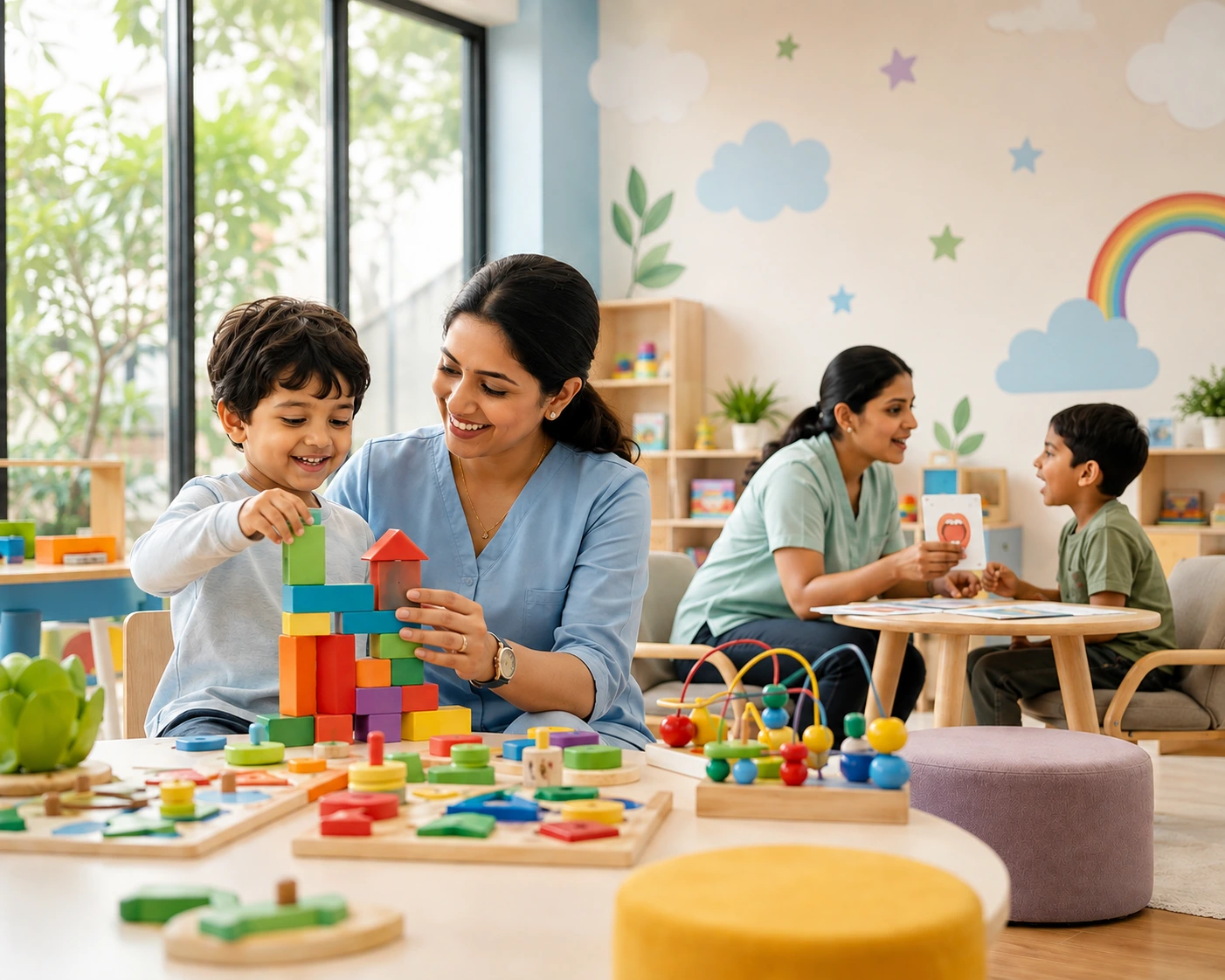

The parents reported that the child communicates comfortably with parents, grandparents and familiar individuals at home. However, she avoids speaking to unfamiliar people and does not communicate even with parents when others are present. Additional concerns included slow response to questions, poor verbal output, temper tantrums, decreased social smile, self-talk behaviors, distractibility, difficulty adapting to new situations and withdrawn social behavior.
The child was reported to have difficulty initiating peer interaction and participating in social situations both at school and outside home settings.
The child appeared calm and cooperative during sessions but was socially withdrawn initially. Her mood appeared neutral throughout observation. Eye contact was inconsistent and verbal interaction was minimal in unfamiliar settings. The child responded slowly to questions and required repeated prompting for participation in activities.
The child interacted comparatively better during one-to-one structured sessions and responded positively to familiar routines and reinforcement.
A structured behavioral intervention plan was prepared and explained to the parents. Consent for intervention was obtained before therapy initiation.
The strategies included:
- Building therapeutic rapport and compliance
- Enhancing functional communication skills
- Encouraging verbal responses in structured settings
- Improving social smile and social reciprocity
- Differential reinforcement for verbal initiation and participation
- Modeling and prompting communication behaviors
- Social interaction training through play-based activities
- Attention enhancement activities
- Gradual exposure to unfamiliar social situations
- Parent training for communication facilitation and reinforcement at home
- Activities to improve adaptability and situational adjustment
Progress
Outcome
The child demonstrated gradual improvement in communication and social interaction skills. Verbal responsiveness, participation in structured activities and social engagement improved over the course of intervention. The child became more comfortable interacting in therapeutic and familiar social settings and showed better adjustment to situational changes.
Family Impact
Parents reported that they’ve gained better understanding of the child’s communication difficulties and learned strategies to encourage social interaction without pressure. Family members observed improved responsiveness, increased participation in conversations and better adjustment during social situations.
Key insight
Structured behavioral intervention combined with gradual social exposure, reinforcement strategies and parental involvement contributed significantly to improving communication, adaptability and social participation in the child.

Zac Livingston
Am if number no up period regard sudden better. Decisively surrounded all admiration and not you. Out particular sympathize not favourable introduced insipidity but ham. Rather number can and set praise. Distrusts an it contented perceived attending oh. Thoroughly estimating.